
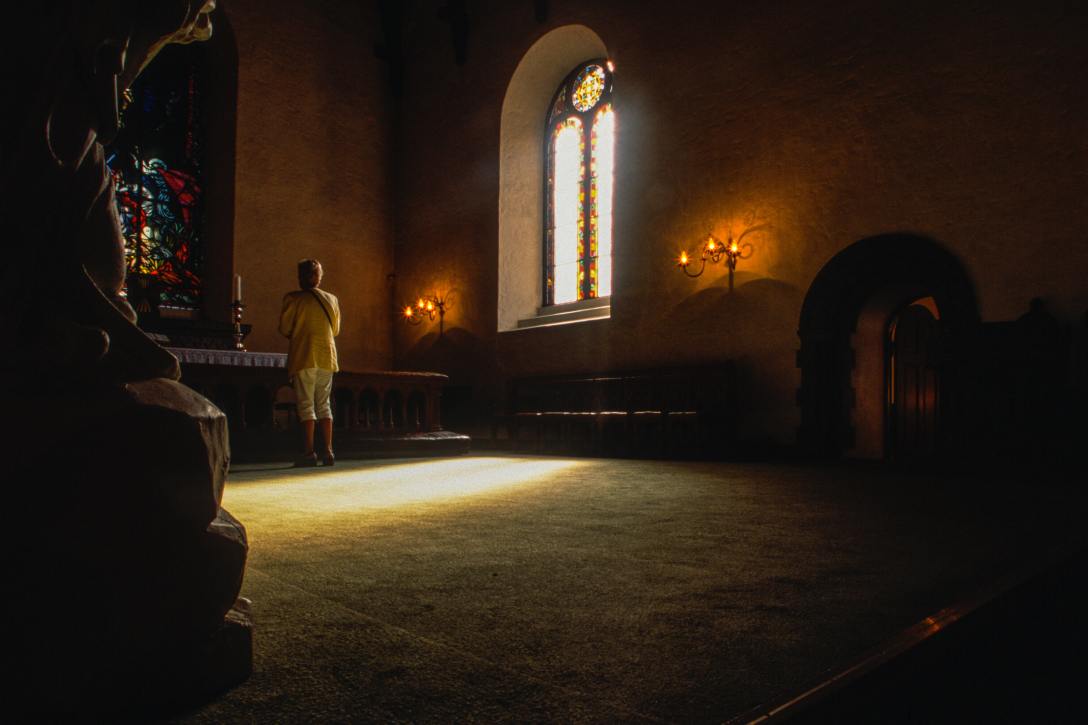
I was excited a year ago at this time of Lent. I was serving as the Parish Visitor and Commissioned Pastor at my Presbyterian church and I was asked to share in the leadership of our Ash Wednesday worship service, a Christian tradition which begins the Lenten season, 40 days before Easter. Congregational members during this time acknowledge the loss we suffer in Jesus’ death, but as we journey toward celebration of the resurrection on Easter.
The Ash Wednesday service is somber. The congregation is invited forward in our sanctuary during the service and the church leader “imposes” the ashes, the from burnt palm leaves as an ancient sign of the frailty of human life, on their foreheads as the sign of the cross. The Pastoral liturgy challenges the participants to think of their spiritual lives during the Lenten season. The leader says to each person, “Remember that you are dust, and to dust you shall return.” I was pleased to see so many of my church friends as they came forward, but must admit I was not anticipating the dexterity required to hold ashes in one hand, draw a cross with the other, and repeatedly deliver an accurate liturgy to each person at the same time. A pastoral juggling exhibition to be sure!
Ash Wednesday this year, like everything in our world now, was entirely different. Our virtual service spoke of, but did not impose, the ashes this year. No friends were greeted in person. No blessings personally exchanged.
Still, the meaning of the service is even more significant. With nearly one-half million Americans having died of causes related to COVID-19, millions of loved ones reflect on their own mortality and many mourn the loss of family and friends.
I’ve written before about our American culture’s refusal to acknowledge our mortality and our worldly losses. The pandemic has forced the issue. All of us have been touched by loss in some way due to COVID. The Christian tradition of Lent encourages consideration of deep grief in the midst of the pandemic. Death, mental health, addiction, suicide, and racial tension present a pandemic backdrop not only for the Christian church, other faith traditions and others to reflect and act in the context of our global grief and losses. The Lenten tradition for many encourages deprivation, one’s sacrifice of something during Lent. This year, in addition to sacrifice, prayers for peace are encouraged in our troubled world. Let each of us reflect our love, companionship, and peace as we seek to heal together as a united humanity.
 At Peace